Exterior Cladding Repairs or Replacement: Costs & Care
Understand when a repair may be enough, what affects replacement costs and how to look after your cladding.
Quick Answer
An isolated damaged board may be repairable if the surrounding cladding and supporting structure remain sound. Widespread deterioration, recurring damp or failing supports may make replacement more practical. The decision should follow an assessment of both the visible boards and the construction behind them.
When Can Cladding Be Repaired?
A local repair may be suitable where damage is confined to a small area. Examples include a cracked board, a loose section or damaged corner trim.
Before recommending a repair, we consider:
- Whether the surrounding boards remain secure and serviceable.
- Whether the supporting timbers and fixings are sound.
- Whether a compatible replacement profile is available.
- How closely the replacement will match the existing finish.
- What caused the damage in the first place.
A new board may look different beside an older, weathered surface. Sometimes replacing a complete small section gives a more consistent result.
When Is Replacement Worth Considering?
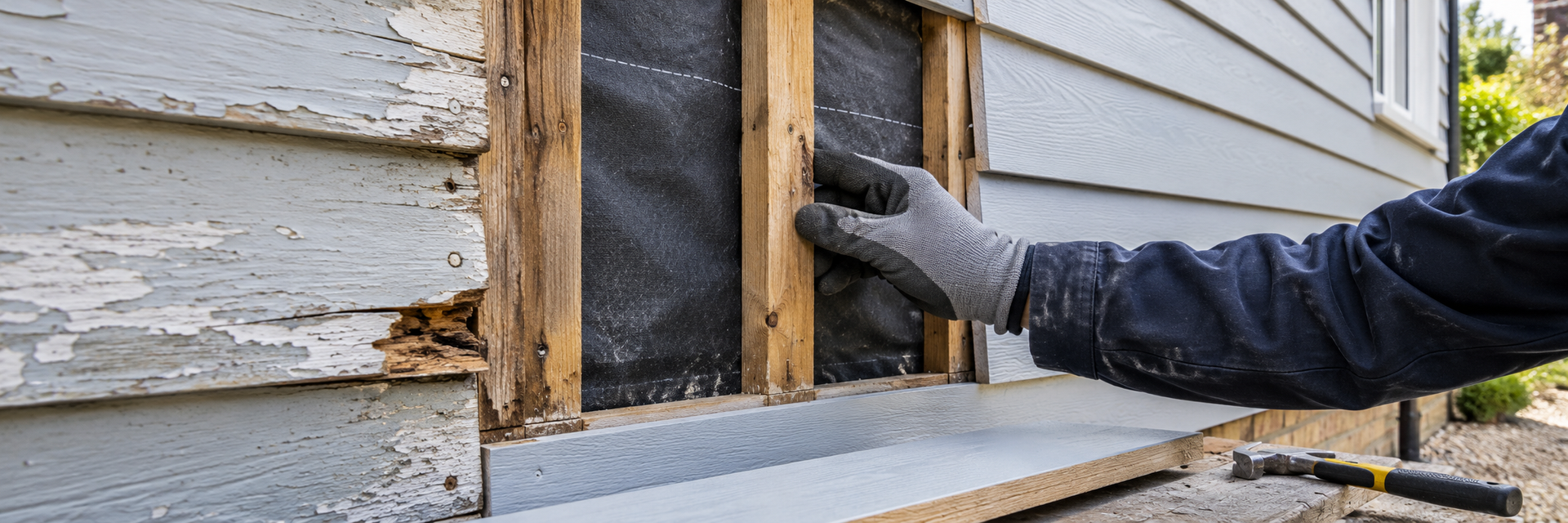
Replacement may be more practical where timber is extensively soft, split or decayed, several boards are failing, or repeated repairs no longer last.
Persistent staining or damp also deserves investigation. Replacing the visible surface alone will not resolve a leaking gutter, defective flashing or another source of water entering behind it.
If you are changing from timber, compare uPVC and fibre cement cladding and check any planning requirements before making a final choice.
Why the Structure Behind the Boards Matters
Cladding needs suitable supports, fixings and detailing. The supporting structure and ventilation arrangements should meet the selected cladding manufacturer’s installation requirements.
During replacement, the exposed structure should be checked before new boards are fitted. Decayed battens, moisture problems and defective details around openings need to be addressed as part of the work.
The installation should follow the chosen manufacturer’s guidance, including requirements for ventilation, movement and clearances.
What Affects Cladding Replacement Costs?
The total depends on more than the area being covered. Important factors include:
- Material, profile, colour and finish.
- Scaffolding or other access requirements.
- Removal and disposal of existing cladding.
- Repairs to supporting timbers or the underlying wall.
- Corners, window surrounds and other finishing details.
- Any insulation work or building control requirements.
Replacing one accessible board involves different work from stripping a high gable, erecting scaffolding and renewing damaged battens. Compare what each quotation includes and how concealed defects would be handled.
How Much Maintenance Does New Cladding Need?
Low maintenance still means occasional care. Eurocell uPVC cladding is designed to be easy to clean and maintain. Follow the care instructions for the selected finish.
For fibre cement cladding, follow the selected manufacturer’s inspection and cleaning guidance. Check joints, ventilation gaps and fixings, and use cleaning methods suitable for the finish. Avoid pressure washing unless the manufacturer expressly permits it.
Check accessible areas safely from ground level and arrange suitable access for higher sections. Keep guttering working properly and investigate loose boards or persistent staining promptly.
Arrange a Cladding Assessment
Suffolk Roofline repairs and replaces exterior cladding across Suffolk. Send your postcode and ground-level photographs to start the discussion. A closer inspection may be needed to assess concealed damage.
Call 07904 575 256 for advice and a quotation based on your property.
Further Reading