Can Leaking or Blocked Gutters Cause Damp and Mould Inside Your House?
What damp after rain can tell you about your gutters and roofline.
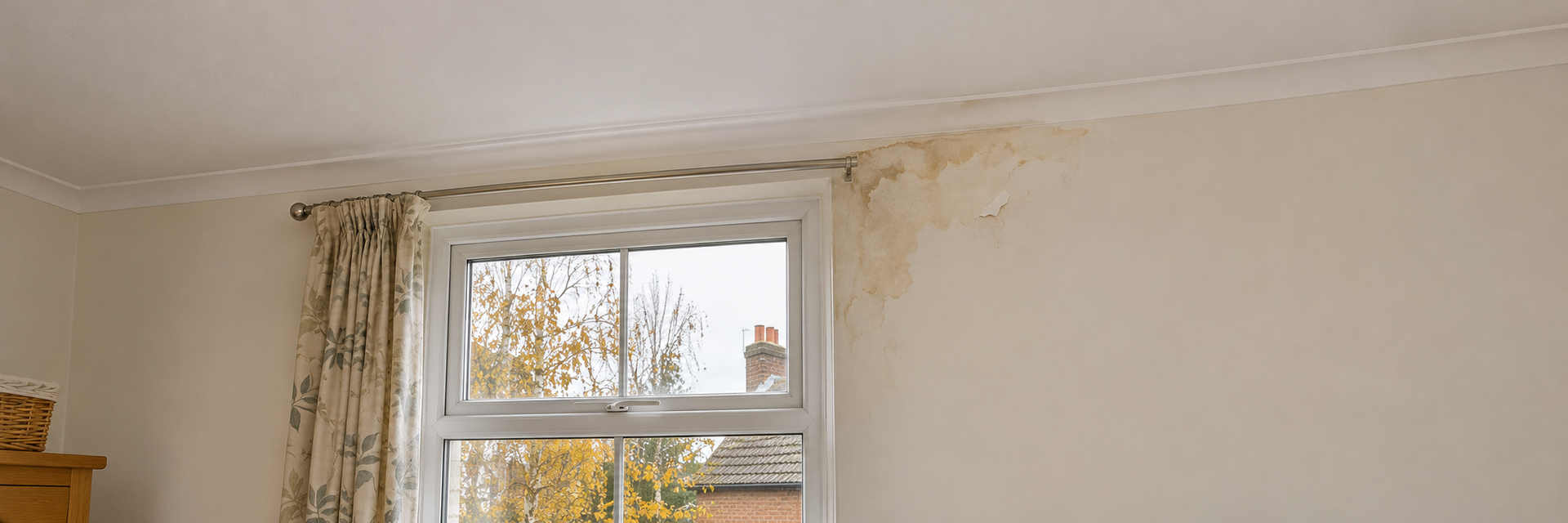
A damp patch on the bedroom wall or mould near the ceiling can send you looking for a problem indoors. Sometimes the source is outside: a leaking gutter, a damaged roof edge or restricted ventilation in the loft.
This guide explains what Suffolk homeowners can check safely, what the signs may mean and when to seek help.
Quick answer
Yes. Leaking or blocked gutters can soak outside walls and allow moisture to reach the inside of your home.
Damp patches that appear or worsen after rain are a reason to check your gutters, downpipes and surrounding roofline.
Other faults can cause similar symptoms, so find the source before deciding on repairs.
In this guide
- How can leaking or blocked gutters cause damp?
- Why roofline leaks can be hard to spot
- What can you check safely?
- Could loft condensation be involved?
- Does it need a small repair or replacement?
- Why a small leak deserves early attention
- When should you get the roofline checked?
- Further reading
- Summary
- Arrange a roofline inspection
How can leaking or blocked gutters cause damp?
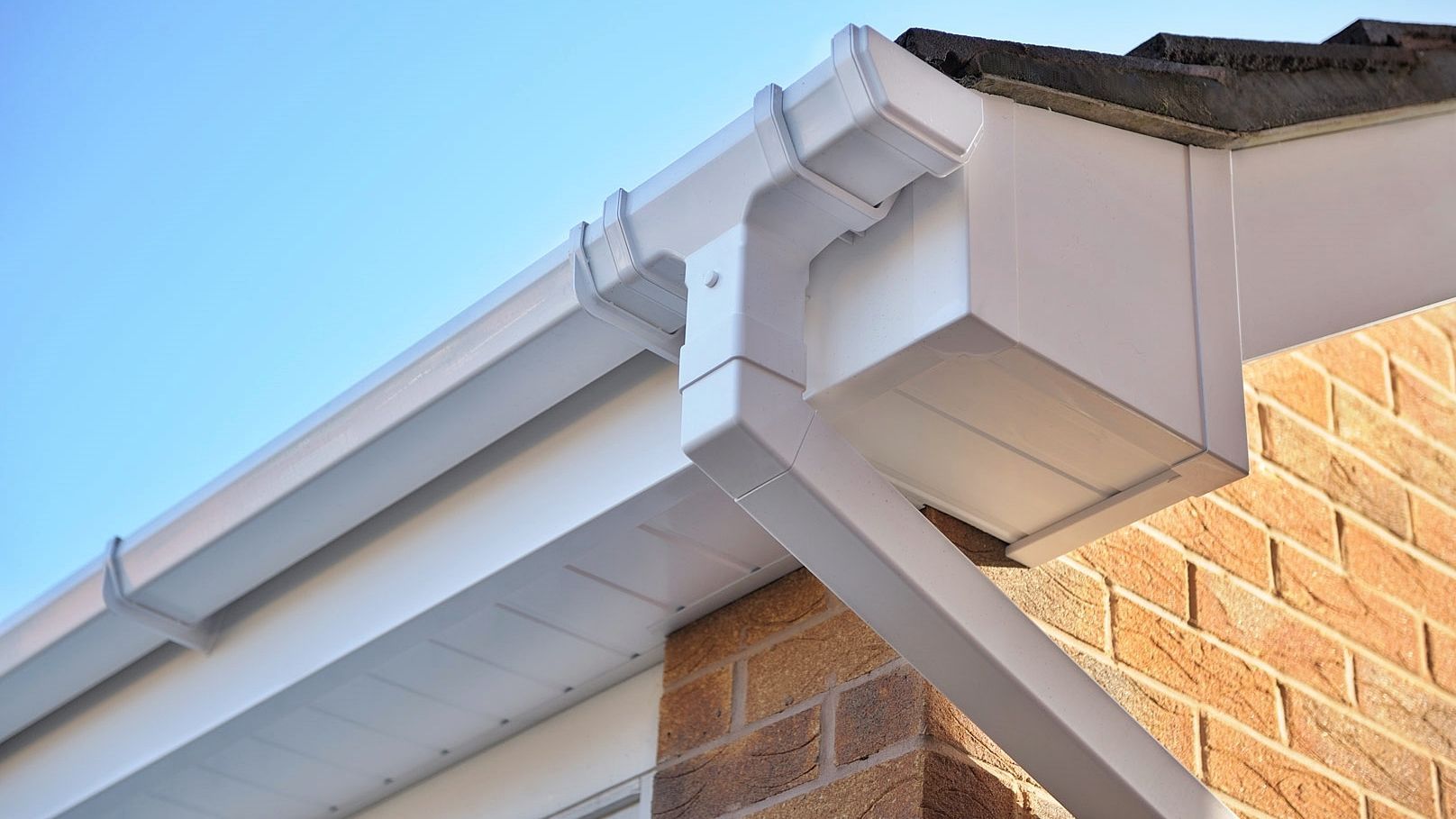
Gutters collect water from the roof and carry it to the downpipes. Leaves, moss or a blocked outlet can interrupt that route, while a leaking joint lets water escape along the way.
Think of a gutter and downpipe like a sink and its waste pipe: the channel may look clear, but water can still back up if there is a blockage further down.
Repeated overflow can soak brickwork or render. Moisture may enter through cracks, defective pointing or other weak spots, affecting upstairs or downstairs rooms. A leaking downpipe can affect walls lower down.
West Suffolk’s Maintaining Historic and Listed Buildings guide explains that overflowing gutters can cause internal damp and decay. It also warns that rainwater soaking walls near ground level can be mistaken for rising damp.
Why roofline leaks can be hard to spot
At Suffolk Roofline, we regularly come across homes where damaged or worn roofline fittings are contributing to damp and mould.
Sometimes there is an obvious trail: water running down the wall, a dripping gutter joint or rotten timber fascias and soffits. Elsewhere, water gets behind the roofline and affects concealed timber before much is visible from the ground.
The indoor stain may not sit directly below the fault. Show the installer the wider area, including nearby windows, downpipes and roof edges.
If you are unsure which part is which, our guide to fascias, soffits, bargeboards and gutters explains the names.

What can you check safely?
A few observations can help an installer decide where to investigate:
- Indoors: photograph damp patches, water stains or peeling finishes and note whether they change after rain. Mould alone does not identify the source.
- Outside: look for overflow, dripping joints, wet tracks beneath downpipes, sagging gutters or damaged boards.
- During ordinary rainfall: a short video from a safe, sheltered position can show a fault that disappears in dry weather.
- Previous repairs: mention any clearing or repair work already done and whether it helped.
Use ground-level photographs or binoculars; there is no need to climb a ladder or remove fittings. Avoid inspecting outside during severe weather.
If the cause remains unclear, or damp is widespread or keeps returning, contact us to arrange a property inspection. We can identify the problem and arrange the necessary repairs or remedial work. Roof coverings, flashing, window joints, plumbing and condensation may all need checking. The RICS damp and mould guide explains why it is important to consider these possible causes.
Could loft condensation be involved?
Damp in the loft can come from condensation rather than a leak. Moist air meeting cold roof surfaces can form droplets, much like a bathroom mirror misting after a shower. Ventilation at the eaves allows fresh air into the roof space, helping carry moisture away. If insulation or debris blocks this route, airflow is reduced and condensation becomes more likely.
Our soffit and eaves ventilation guide explains the options, including our preferred system above the fascia. Roof ventilation is separate from ventilation in living areas, so improving airflow in the loft will not automatically cure mould elsewhere.
Does it need a small repair or replacement?
Repairing a leaking joint, clearing a blockage or adjusting gutter brackets may be enough. Where suitable, a gentle fall towards the outlet downpipe helps water drain by gravity. Adjustments should follow the manufacturer’s guidance.
Rotten boards or failing fittings may need replacing, but the extent depends on their condition. Covering rotten timber with plastic does not repair it.
Getting a suspected fault checked promptly can help prevent further damage and keep repair costs down. Our gutter repair or replacement guide explains the options.
Why a small leak deserves early attention
A leaking joint may repeatedly wet a timber fascia. As the timber softens, its gutter brackets can loosen. The gutter then sags, making drainage worse and wetting a larger area.
A job that began with one fitting can grow to include replacement boards, guttering and concealed timber repairs. More work may also mean more access equipment, disruption and cost.
Indoors, the consequences can include mould treatment, repainting and, where damaged, replacement plaster or plasterboard. The moisture source needs fixing first, with time for affected materials to dry sufficiently before finishing work. Painting over a damp stain will not stop the water causing it.
After repairs, keep an eye on the area through later rainfall. If the patch worsens or returns, arrange a further check.
When should you get the roofline checked?
Autumn is a sensible time to check gutters ahead of winter rain. Where trees overhang the roof, check again after leaf fall and arrange clearing when needed.
You do not need to wait for winter or when a stain appears on your bedroom wall. A joint that keeps dripping or guttering that regularly overflows is already a reason to investigate. If water is entering your home, arrange help promptly.
Further reading
Related Suffolk Roofline guides
- Leaking gutters: is a repair enough?
- Fascias, soffits, bargeboards and gutters explained
- Do soffits need vents?
Independent guidance
Summary
A gutter fault may explain damp indoors, particularly when patches worsen after rain. Check the cause, deal with the fault and monitor what happens afterwards. Early repairs can help avoid wider damage to timber, plaster and decoration.
Arrange a roofline inspection
Not sure whether your guttering is causing the problem? If you have leaking gutters, damaged boards or damp that gets worse after rain, send us your postcode, a few ground-level photographs and a brief description.
We can often spot obvious roofline faults from photographs and explain whether a repair, clearance or further investigation may be needed. Where a closer look is necessary, we can arrange a visit.
Based in Sudbury, Suffolk Roofline supplies, fits and repairs fascias, soffits, guttering and downpipes across Suffolk and neighbouring Essex, including Hadleigh, Ipswich and Bury St Edmunds.
Explore our roofline services or browse more Advice & Guides.