Gutter and Roofline Maintenance for Landlords in Suffolk
Prevent avoidable repairs, protect your property and keep tenants comfortable with regular checks of gutters, downpipes, fascias and soffits.
Introduction
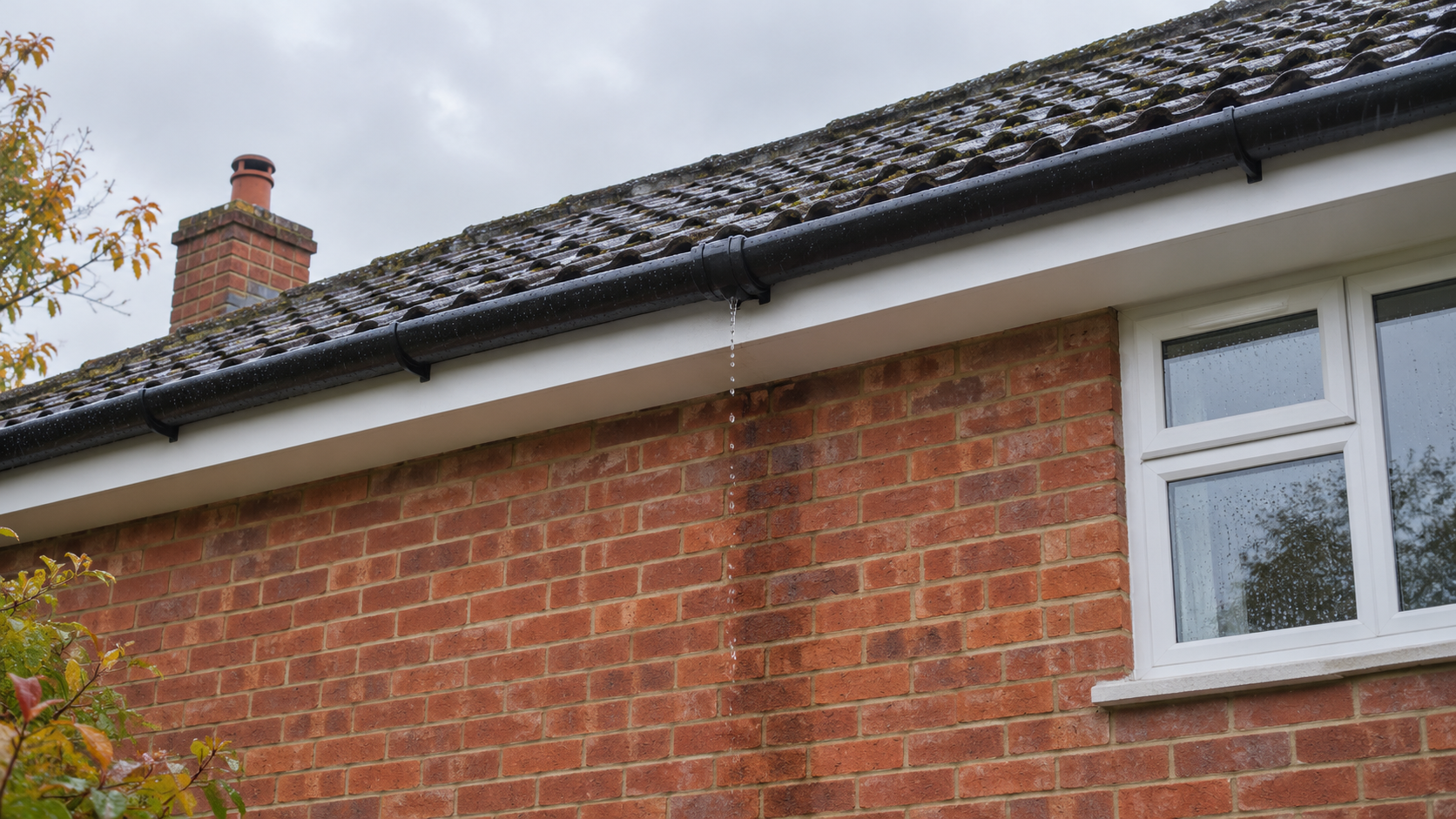
A leaking gutter may start as a small drip above a window or an overflowing joint during heavy rain. Left unchecked, that escaping water can damage the property and leave tenants dealing with damp walls, spoiled decoration and repeated repair visits.
For landlords, regular roofline maintenance makes financial sense. Finding a failed joint or deteriorating fascia early can limit the work needed later.
This guide explains what to look for, when to arrange maintenance and how to respond when a tenant reports a problem.
Quick answer: why should landlords maintain the roofline?
Regular gutter and roofline maintenance helps prevent rainwater damage, reduce avoidable repair bills and keep tenants comfortable. Check gutters, downpipes, fascias and soffits in spring and autumn, with extra checks where trees or storms cause problems. Repair leaks promptly, investigate damp reports and keep a record of the work and follow-up.
In this guide
Why looking after the roofline benefits everyone
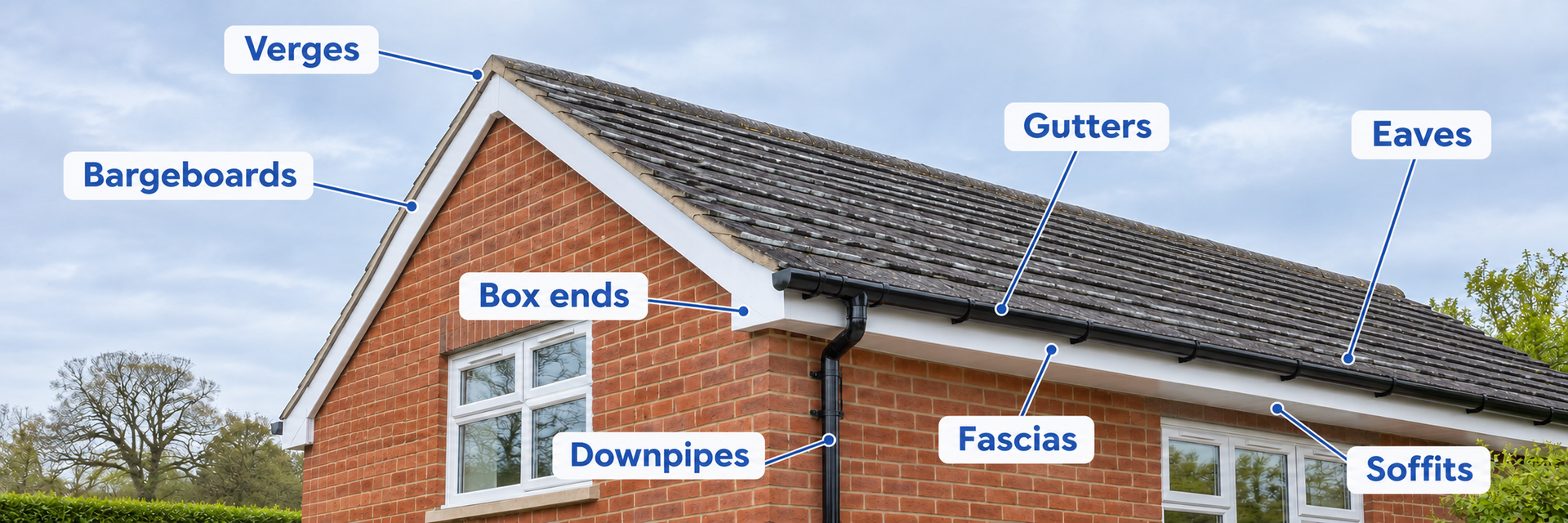
Gutters and downpipes carry rainwater away from the roof. Fascias commonly support the gutter brackets, while soffits close the underside of the eaves. Their condition should be considered together.
A leaking gutter can repeatedly wet timber fascia boards. If the timber decays, its fixings may become insecure and the gutter can sag, making drainage worse. Loose or damaged soffits also need investigation, including checks for nearby leaks and the condition of roof ventilation.
Putting these faults right early can mean fewer repairs, fewer visits and less disruption. For tenants, it means less worry about the condition of their home and belongings. For landlords, it helps protect the building and maintain a good working relationship with the people living there.
Our guide to fascias, soffits, bargeboards and guttering explains each component.
How leaking gutters can cause damp and mould
Blocked outlets, leaking joints and damaged downpipes can direct rainwater onto brickwork or render. Where that water finds a route through the building, it can cause penetrating damp, with internal staining, peeling paint or damaged plaster.
A damp patch that worsens after rain is a useful clue, but roof coverings, flashing and window joints may also need checking.
Condensation is another common cause of damp and mould, and both problems can occur together. Government guidance recognises that penetrating damp can worsen condensation dampness. Mould alone does not identify the source.
Read more about whether leaking or blocked gutters can cause damp or mould.
A small repair can become a larger job
Clearing an outlet or repairing a joint may be straightforward. Once water affects other parts of the property, the work can extend to timber repairs, drying, plastering, mould treatment and redecoration.
There is no fixed timetable for this damage. Its extent depends on the defect, weather and building construction, so a visible leak deserves attention even if the interior still looks dry.
Insurance should not be relied upon to cover neglected maintenance. Policies may exclude gradual deterioration and wear and tear; the Financial Ombudsman explains how gradual-damage claims are assessed.
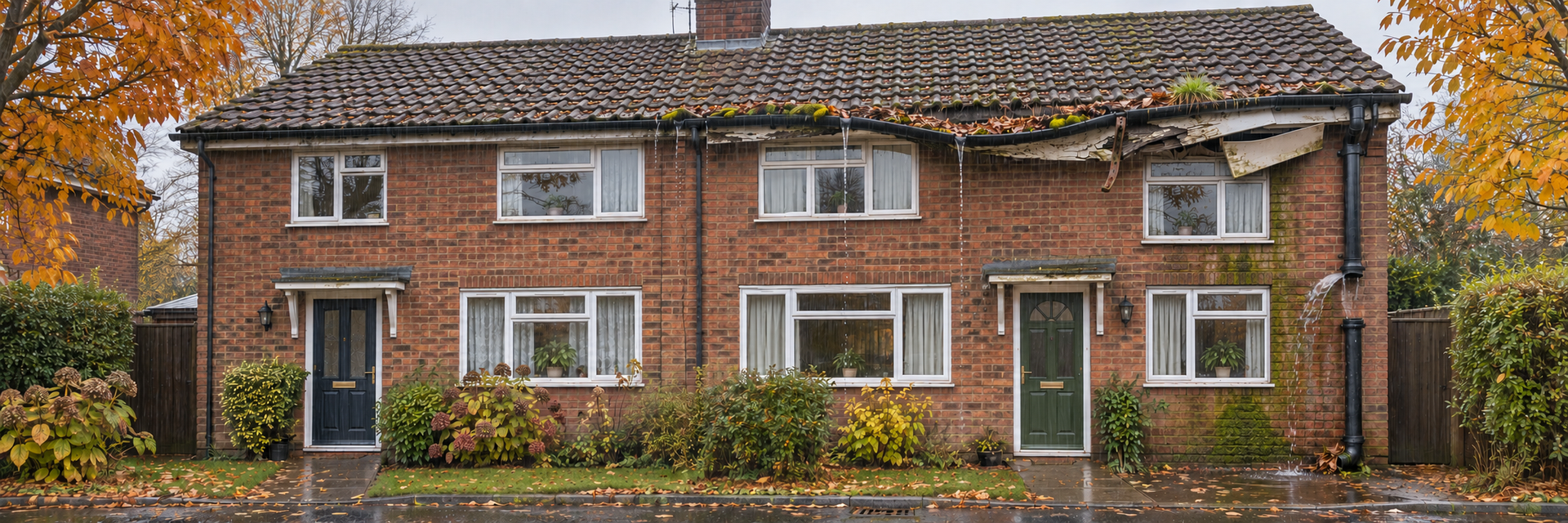
Roofline warning signs worth checking
During property inspections, look for:
- Leaves, moss or plants in gutters, especially around outlets.
- Drips from joints or water spilling over the gutter during rain.
- Sagging sections or loose brackets, including gutters pulling away from fascias.
- Disconnected downpipes or restricted outlets, including debris around the bottom bend or shoe.
- Staining beneath the gutter or repeated pooling near a downpipe.
- Deteriorating timber, peeling paint or loose fascia and soffit boards.
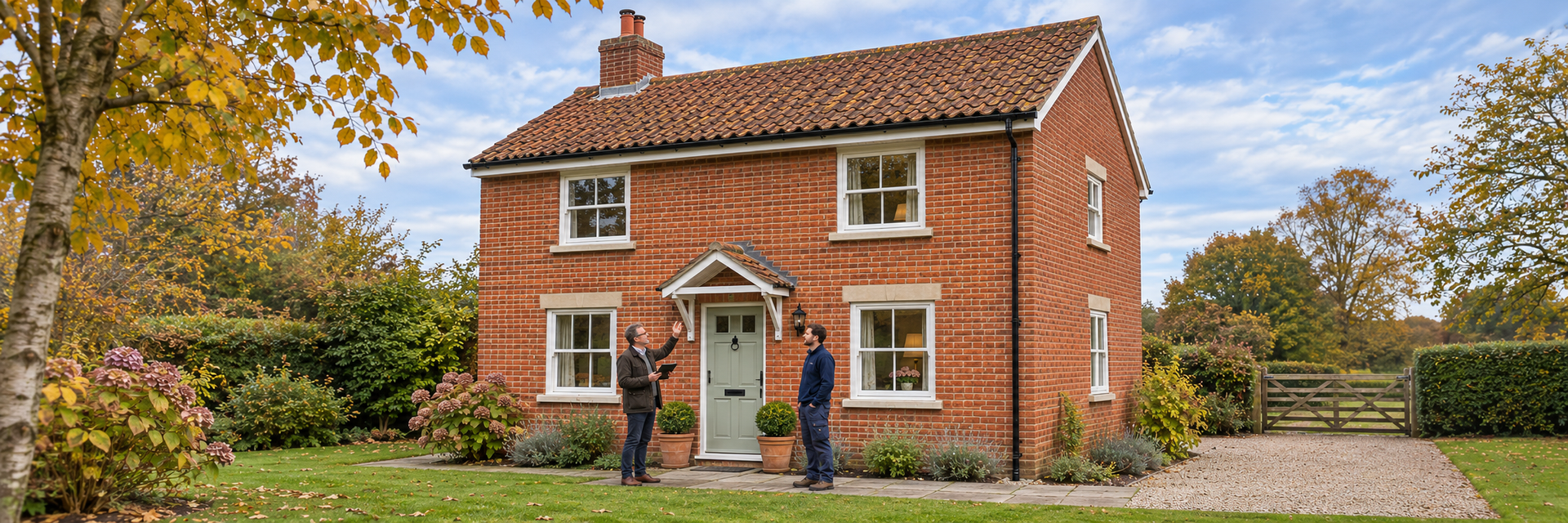
Check safely from ground level and arrange suitable access for closer inspection. Tenants should not be expected to climb ladders.
If gutters still overflow after clearance, ask the contractor to check their alignment, capacity and outlet arrangement. Repeated cleaning will not correct an installation fault.
See Suffolk Roofline’s article on Roofline Maintenance: What Should You Check?
A maintenance schedule for Suffolk rental properties
Spring and late autumn are sensible starting points for inspections. Arrange gutter cleaning according to how quickly debris builds up and any previous problems at the property.
| When | What to arrange |
|---|---|
| Late autumn, after most leaves have fallen | Check and clear accumulated leaves, moss and silt from gutters and outlets. |
| Spring | Check joints, brackets, downpipes and roofline boards for damage or deterioration. |
| After severe weather | Look for overflow, displaced fittings and water running down walls. |
| Where blockages recur | Consider checks every 3–4 months, then adjust the interval to what is found. |
Landlord tip: Properties surrounded by mature trees may need clearance more often than twice a year. This applies to homes around Hadleigh, Long Melford, Sudbury and Suffolk’s villages wherever trees shed debris onto the roof.
For exposed coastal properties around Felixstowe, check loose fittings after strong winds. Summer downpours can also reveal drainage problems, so do not leave a known fault until autumn.
Ask for the whole rainwater route to be checked, including downpipes and accessible drainage gullies. A blockage at ground level can prevent water draining away even when the gutter is clear.
For letting agents, property managers and portfolio landlords, keep a separate maintenance record for each property, with a named person responsible for arranging repairs and checking completion.
Repair or replace?
A local repair can be the most cost-effective option when damage is limited to a joint, bracket or short section and the surrounding guttering and supporting boards remain sound.
Replacement may be the better long-term option when faults keep returning, several sections are deteriorating or the supporting fascia boards are no longer sound. Check why the system has failed before deciding what to replace.
When replacing fascias or soffits, maintain suitable roof ventilation. New uPVC roofline products still need inspections, and guttering still needs clearance.
See Suffolk Roofline’s article on
Leaking Gutters: Is a Repair Enough?
Older Suffolk properties
For period homes in places such as Lavenham and Long Melford, suitable materials and repair methods matter. Babergh’s historic building guidance identifies blocked gutters as a potential cause of damp and advises getting buildings into good repair before energy efficiency upgrades.
Check consent requirements before altering a listed building’s traditional roofline. Conservation-area restrictions may also affect proposed changes; the council can advise on the individual property.
See Suffolk Roofline’s fascia, soffit, guttering and downpipe repair and installation services.
Landlord responsibilities and Awaab’s Law
For most residential tenancies in England, section 11 of the Landlord and Tenant Act 1985 requires landlords to keep the structure and exterior in repair, including gutters, drains and external pipes. Tenancy clauses about routine cleaning do not remove statutory repairing duties.
Unresolved damp and disrepair can lead to council enforcement or claims for repairs and compensation, depending on the circumstances. Babergh’s housing standards service provides local guidance.
What does Awaab’s Law mean for landlords?
Awaab’s Law is named after the two-year-old who died in 2020 following prolonged exposure to mould in his social rented home. Its first phase took effect in England on 27 October 2025.
For relevant social housing tenancies, the main requirements include:
- Emergency hazards: investigate and, if confirmed, make safe as soon as reasonably practicable, within 24 hours of awareness.
- Significant damp and mould hazards: investigate within 10 working days of awareness and complete safety work within 5 working days of the investigation ending.
- Communication: normally provide a written investigation summary within 3 working days.
Further preventative work and alternative accommodation requirements also apply. See the full government guidance on Awaab’s Law.
For private rentals, as at 15 November 2026, the extension is still being developed through consultation and further regulations. These social housing deadlines should not be presented as current private-sector deadlines. Existing repair and housing fitness duties continue to apply, with action required within a reasonable time according to urgency and circumstances. Check the private-sector update.
When a tenant reports a leak or damp
Acknowledge the report, record where the problem is and ask whether it worsens after rain. Photographs can help, but should not be a condition for investigating.
Assess urgency, taking account of the occupants and any health concerns. Arrange appropriate investigation and repairs, and tell the tenant what will happen next. Agree access and give the required notice.
Address the moisture source and any mould risk promptly. Do not postpone necessary mould treatment until every building repair is finished, or redecorate while the underlying problem remains.
Check that the repair has worked, including during later rainfall. For damp and mould, government guidance recommends a follow-up inspection at least six weeks after remedial work to check for recurrence. Persistent or unexplained damp may need an independent surveyor experienced in damp investigations.
See the government’s damp and mould guidance.
Landlord gutter and roofline maintenance checklist
- Schedule spring and autumn checks, with extra visits where needed.
- Inspect downpipes, outlets and accessible gullies as well as gutters.
- Check timber fascias, soffits and gutter supports.
- Act on leaks and tenant reports without waiting for the next routine visit.
- Record findings, photographs, repairs and outstanding work.
- Keep tenants informed and confirm that repairs have resolved the problem.
Download a landlord roofline inspection and maintenance record
Use our free, fillable PDF to record what was checked, any defects found, the repairs arranged and the outcome. Keep it with dated photographs, contractor reports and invoices to help demonstrate the steps you have taken to maintain the property.
Download: Landlord roofline inspection and maintenance record (PDF)
Complete it digitally or print it for each visit. It includes an inspection checklist, tenant-report and access notes, an action plan and a repair follow-up record. Completing the form alone does not establish legal compliance; the work and follow-up still need to happen.
Protect your rental property before the next leak
If your gutters overflow, joints drip or fascia boards are deteriorating, arrange a check before further damage develops. Suffolk Roofline provides guttering, downpipe, fascia and soffit repairs and replacement across Suffolk and neighbouring Essex.
Send us the property address, a brief description of the problem and any photographs taken safely from ground level. We can assess the roofline, identify visible defects and advise on a cost-effective repair or replacement based on its condition.
Contact Suffolk Roofline about your rental property →
For ongoing upkeep, download the maintenance record above and use it to keep checks, repairs and follow-up dates together.
Information in this article has been checked and is correct to the best of our knowledge as of 15 November 2026. Guidance and legal requirements may change.